
Death and Vanilla är en stor överraskning. De klär sig i Beardsley, de smyckar sitt arbete med fantastiska ljud. På lördag ska de spela för första gången, på Kristallen i Malmö. Låtarna de har på myspace är prov på en långt framskriden estetik. Jag bara undrar hur mycket alla kommer att gilla det här…
Unheimliches Neujahr
1 januari 2010

Position Normal “Music Knowledge (edit)”
Mort Garson “The Evil Eye”
Roj “You Are Here”
A To Austr “Thumbquake & Earthscrew”
Delia Derbyshire/Dudley Simpson/Brian Hodgson/David Vorhaus “Whirring Menace”
Position Normal “Nostril and Eyes (edit)”
Belbury Poly “Time Scale”
Broadcast & the Focus Group “What I Saw”
The Mesmerizing Eye “Exercise In Frustration”
Kreng “Na de Sex”
Position Normal “Evil (edit)”
Bruce Haack “Chant Of the Unborn”
Edward Williams “Coral Larvae”
Basil Kirchin “Head Steam”
Broadcast & the Focus Group “Oh You Chatterbox”
Position Normal “I’ve Been Alvin”
Woebot “Salami”
Delia Derbyshire with Berry Bermange “Dreams (edit)”
Edward Williams “Man - A Choice For a Future Of Life On Earth? (edit)”
Position Normal “Hop Sa Sa (edit)”
Retrical quality, willaby wallaby
24 oktober 2009
Man kan bara se fram till 2.30. På en halv minut går klippet från mästerligt till uselt.

I married a wife in the month of June,
Risselty rosselty, now now now!
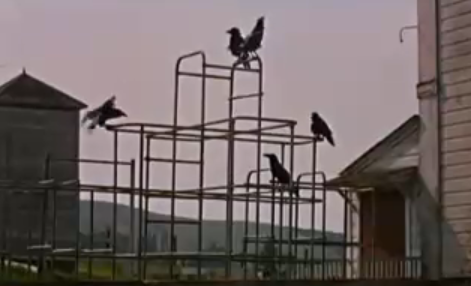
I carried her off by the light of the moon
Risselty rosselty, hey bombosity, nickety nackety,
retrical quality, willaby wallaby now now now!

She combed her hair but once a year,
Risselty rosselty, now now now!

With every rake she gave a tear,

Risselty rosselty, hey bombosity, nickety nackety,
retrical quality, willaby wallaby now now now!

Edu (adoramus)
3 september 2009

Jag har sedan ett tag varit frälst av Edu Lôbos album Missa Breve (1973). Det är en legering av två av de, kanske, vackraste estetiska traditionerna mänskligheten har skapat, med de utsökta skiftningarna i den brasilianska musiken och allt det sublima kristendomen försökt uppbringa för att ingjuta tro i sina församlingar, här i en. På en grekiska och ett latin som lagt sig mjukt i “Upa, Neguinho”s modersmål. Men vi ska inte till stranden. Inte heller gå i kyrkan. Himlen, kanske (”Glória”). Lite mörkare kretsar (”Libera Nos”). Klarheten själv (”Oremus”). Och ett rop efter förbarmande - i ett fantastiskt arrangemang (”Kyrie”).
Rösterna på denna inspelning är, utan tvekan, lätt överjordiska. Edu Lôbo, vilken uppenbarelse. Och han har änglar med sig. Edu, på orden “Domus pater omnipotens”, som han böjer att följa vershörnen. De, när de ansluter honom i “Miserere nobis” (’vår förtvivlan’). Åh, Gud.
Havet med flytväst
24 augusti 2009
Om man skulle ta en resa efter sommaren, till någonstans där man får ha flytväst och varma tröjor? Och hålla på och skoja, sjunga och åka gummibåt?
Jag tänker på Heingeborgen
7 augusti 2009
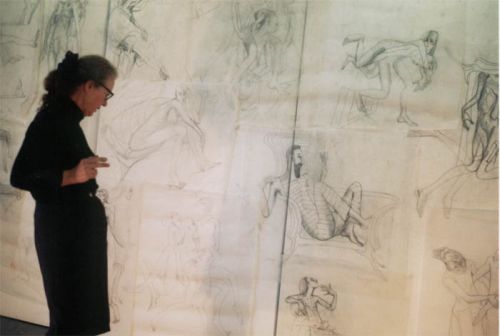

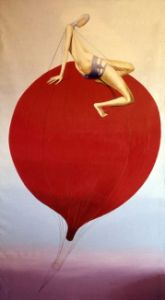
Av någon anledning kom jag att tänka på Anna-Stina Ehrenfeldt, den surrealistiska målarinnan som var gift med Sture Dahlström. Under nittiotalet besökte vi Anna-Stina och Sture i Heingeborgen varje påsk. Första gången vi kom var det nog mest för Stures skull, för att få komma i närheten av “Sveriges ende beatförfattare”. Givetvis hade jag ingen aning om vad jag ville säga till honom när han faktiskt stod där livs levande och hälsade välkommen. Sedan blev det en efterlängtad tradition. Något år blev L förälskad i en tavla som gick helt i rött, men vi hade inte råd att köpa den och när vi spanade efter den året därpå, då vi kanske kunde haft råd, var den förstås borta. Men det var nog inte i första hand för Anna-Stinas målningar vi kom tillbaka till Heingeborgen år efter år. Det var för huset, för att en stund bli del av den speciella atmosfär som Anna-Stina och Sture hade skapat där.

Heingeborgen var en gammal skola och den årliga utställningen var i huvudsak hängd i en av salarna, men man kunde röra sig fritt på hela bottenvåningen och även upp i en vindlande trappa där mindre målningar och teckningar hängde. Det var ett lugnt och tryggt hus, en borg som i “mitt hem är min borg”, inte en fästning. Man var välkommen som besökare, men trots att folk strömmade in och ut genom dörren under det absurda folkrace som är konstveckan behövde man aldrig tveka om vem som var husets herre och fru. (Även om man till äventyrs inte skulle känna till Stures gråskäggiga uppenbarelse på förhand.) Anna-Stina var smärt och finlemmad som kvinnorna på hennes tavlor, oftast dräktklädd. Jag tyckte hon hade en närmast fransk elegans, ett slags chosefri förfining som ingav respekt. Sture hade alltid välputsade skor, oftast skjorta och V-ringad pullover, konstant rökande. Man hade en känsla av att de klätt upp sig för tillfället, men klätt upp sig i kläder de kände sig bekväma och avslappnade i. Deras hem var lika avspänt elegant. De delar man kom i kontakt med var sparsamt möblerade och smakfullt men inte utstuderat dekorerade. Några av möblerna var i art deco-stil, några äldre, men inget gav ett musealt intryck. Man förstod att de var väl använda och älskade för både sin skönhets och sin bekvämlighets skull. Där fanns några vackra, nötta persiska mattor, en moraklocka och ett fåtal föremål från parets många år i Spanien, utgångspunkter för minneståg och drömfärder. Man stannade upp för en stund och tittade ut på gräsmattan och de ännu bruna åkrarna och de nakna buskarna och träden och förstod att det här var en plats där det var lätt att drömma sig bort men ändå vilja vara kvar.


På 80-talet läste jag med stor behållning de flesta av Stures böcker och nu ser jag att jag köpte Tuppdagg med dedikation på Heingeborgen 1990, samma år som min son föddes. När jag bläddrar igenom mina Dahlström-böcker, inklusive ett par som jag köpte på samma plats vid senare tillfällen, undrar jag om inte just Tuppdagg var den sista av Stures böcker som jag riktigt njöt av. Kanske var det inte lika lätt som ansvarsfull familjefader? Eller så blev Stures böcker helt enkelt sämre på slutet. Nu funderar jag på om jag skulle våga läsa om någon av dem. Fast vad jag egentligen skulle vilja är ju att kunna besöka Anna-Stina och Sture på Heingeborgen igen.

Fotnot: Heingeborgen såldes nyligen och bilderna är mäklarens.
Cage på konsthallen
23 juli 2009
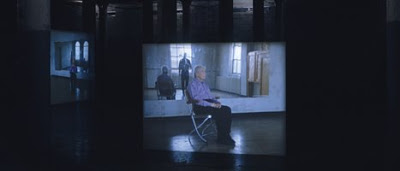
Tacita Dean: “Stillness” (2007)
I höstas satte Lilith Performance Studio upp ett verk med Ewa Rybska och Wladyslaw Kazmierczak i ett bussgarage på Sorgenfri i Malmö. På en duk visades klassiska performance-verk som livetolkades av Rybska. Ett av dessa var ett framträdande av John Cage i amerikansk tv 1960, där han framför en komposition med diverse köksredskap och ett badkar. Tv-publiken reagerar som barn på cirkus och gapskrattar när den allvarlige mannen släpper ut ånga ur en tryckkokare och strilar med vatten, och bryr sig inte om att lyssna på vad han gör – på hur det låter. Det var häftigt att se hur Ewa Rybska liksom lät sig besättas av Cages ande och föra hans nästan 50 år gamla framträdande in i det kyliga garaget och samtiden. Det funkade.
Det gör det tyvärr inte när samma Cage-film nu visas på den annars mycket sevärda Sonic Youth-utställningen på Malmö konsthall. Den presenteras i en dålig inspelning på en liten monitor med kasst ljud – utan hörlurar. Ljudet, det vill säga det väsentliga i sammanhanget, dränks av konsthallssurr och brus. Det är som att den skrattande tv-publiken får rätt. Det blir bara cirkus.
Ett annat Cage-relaterat verk på utställningen är filmen ”Stillness” (2007) av Tacita Dean. Hon låter den legendariske dansaren Merce Cunningham, som för övrigt fyllde 90 våras, framföra en ”dans” till John Cages verk ”4.33” från 1952. Stycket består av 4 minuter och 33 sekunders tystnad i tre satser, och Cunningham förhåller sig till musiken genom att sitta stilla under lika lång tid. En man med klocka håller koll på tiden och satsbytena markeras av att Cunningham byter ställning i stolen.
Idén att föra samman de båda konstnärerna så här är gripande och oemotståndlig. Cunningham och Cage samarbetade i över 40 år, fram till Cages död 1992, och de var dessutom livskamrater. Men det finns en allvarlig brist i utförandet. Visserligen är detta orimligt med tanke på att Cunningham är inblandad, men jag kan inte komma till någon annan slutsats än att Tacita Dean har fått något mycket väsentligt om bakfoten.
För om vi är överens om att ”4.33” är ett stycke musik, så ska det framföras av en musiker. Inte som i Deans film, av en man med tidtagarur. ”4.33” är inte vilken tystnad som helst, utan en tystnad som initieras och inramas av en pianist som sätter sig vid ett piano eller en dirigent som höjer taktpinnen. Eller åtminstone någon som trycker igång en inspelning. Att det sedan inte följs av något ljud, beror på att ”4.33” innehåller den för all musik så essentiella ingrediensen paus. Styckets särdrag är att det består av extra mycket av denna ingrediens. Genom att slopa musikern, underkänner man styckets musikaliska anspråk, och därmed Cages roll som kompositör. Åter ekar tv-publikens inskränkta flabbande hånfullt i konsthallen.
Beställde idag LED lampor till Skodan

Jag är inte så extremt bilintresserad av mig som person men jag kände till slut att jag var tvungen att skaffa mig nya lampor till bilen så att jag faktiskt kan se vart jag kör i mörkret. Lamporna på min Skoda Octavia lyser svagt och ljusstyrkan har försämrats väldigt mycket sedan jag fick bilen. Jag blev rekommenderad av min väninna Natalie att satsa på varselljus med lysdioder för bästa resultat. Jag som inte kan något om bilar fick börja söka på nätet för att förstå vad hon talade om. Efter cirka 10 minuter så lade jag en beställning på nätet och fick allt hemlevererat inom bara två dagar, helt klar godkänt! Jag beställde även led konvertering som ska ersätta standard lamporna i billyktorna. Jag vet faktiskt inte hur bra det blev än med varken led konverteringen eller varselljuset då jag inte haft tid att få hjälp med monteringen. Jag får helt enkelt vänta tills Natalies kille har tid att hjälpa mig med detta tråkiga jobb, vi tjejer är ju upptagna med annat som ni säkerkligen förstår. Nu är det dags för mig att återgå till jobbet, kram på er!
Vuvuzela
23 juni 2009

Den mest karaktäristiska och fascinerande detaljen med en sydafrikansk fotbollsmatch är den genomträngande, brölande ljudmattan som hörs från avspark till slutsignal. Instrumentet bakom ljudet kallas vuvuzela, en drygt 60 centimeter lång plastlur, som solo har ett trombonliknande läte. Men när tusentals supporters blåser samtidigt uppstår detta mäktiga surr, som av en svärm jättebin ackompanjerad av en fyrtornsarmé, dirigerade av Peter Brötzmann.
Det har gnällts en hel del på ljudet under den nu pågående Confederations Cup. Spelarna har svårt att kommunicera och upplever det som störande. FIFA ville länge förbjuda vuvuzelor under VM nästa sommar, men har fått ge med sig eftersom de utgör en så central del av sydafrikansk supporterkultur. Så nervklena europeiska fotbollsspelare och supporters får bita ihop, stoppa fetvadd i öronen och ägna det kommande året åt koncentrationsövningar. Nästa tillfälle att avnjuta ljudet är på onsdag i semifinalen mellan Spanien och USA, och på torsdag mellan hemmalaget Bafana Bafana och Brasilien.
En drömmare i Split
20 juni 2009
Tre scener från en bortlagd novell.
Jag vet fortfarande inte riktigt varför jag hade blivit inbjuden och jag hade nog redan från början misstänkt att det var ett misstag. Men inbjudan hade varit äkta, det hade jag kontrollerat med det kroatiska konsulatet nästan på en gång. Avsändare var The Ministry of Cultural Affairs of Republika Hrvatska och man hade äran och glädjen att välkomna mig som talare vid The 5th International Symposium of Jazz Studies som skulle hållas i Split från detta datum till det där. Jag var välkommen redan ett par dagar innan symposiet skulle börja för att diskutera innehållet i mitt anförande med herr Director Ante Simunovic, men man lät mig förstå, som om det var en överflödig självklarhet, att jag förväntades koncentrera mig på den kroatiska jazzens portalfigur, vibrafonisten Boško Petrovic och hans betydelse för den europeiska jazzens utveckling. Flygbiljetter skulle skickas och jag var inbokad på Hotel Marmont i fem nätter.
Jag kunde inte rimligen anse mig vara någon expert på Boško Petrovic och hans musik. I själva verket hade jag hört ytterst lite av den. Han hade sin storhetstid på sextio- och sjuttitalen när skivor från bakom järnridån var svåra att komma över och i alla händelser var jag för ung då för att alls bry mig om det. Idag är han en uppburen man i Kroatien men hur stor är han egentligen i övriga Europa? Men visst nog hade jag sökt inspelningar av Petrovic nyligen. I Rörsjöstaden finns en liten skivbörs med inriktning på jazz och där hade jag varit inbegripen i en diskussion med innehavaren som menade att det var de tidiga inspelningarna med Zagreb Jazz Quartet jag borde leta efter.
- Jaså du är intresserad av kroatisk jazz? hade han sagt med lätt höjda ögonbryn.
Mannnen hade varit väl insatt men menade att skivorna var svåra att få tag på, näst intill omöjliga, och att han i alla händelser inte kunde hjälpa mig. När jag frågade honom om han själv hade dem, hade han svävat på målet men medgivit att han hört dem. Jag hade en bestämd känsla av att han visste mer än han erkände. Det var för övrigt något ytterst opålitligt över hela hans uppenbarelse. Hans leende var inte välkomnande eller vänligt, men inte heller inställsamt, utan snarast sniket förväntansfullt, som om han bara väntade på att lura nästa kund. Jag hade inte köpt särskilt många skivor av honom men de gånger jag gjort det hade jag undantagslöst känt mig uppskörtad och inte alls så nöjd som man borde vara när man fått tag på en länge eftersökt raritet.
Jag minns att jag hade gått hem och lyssnat på Lasse Färnlöf, hela Cachasa-sviten, och ändå känt mig missmodig och apatisk. Inte ens indisk mat kunde få mig på bättre humör och hustru och son hukade under mitt dåliga humör och talade tyst med varandra, vilket gjorde mig ännu mer nedslagen.
—
När jag anlänt till hotellet lyssnade jag på With Pain I Was Born. Det var ingen tvekan om att Petrovics vibrafonspel var speciellt, oftast mjukt och eftertänksamt, men med plötslig, upprymd attack i solopartierna. Jag visste alldeles säkert att det fanns mer att höra, men ju mer jag googlade och försökte tänka efter, desto mer panikslagen blev jag. Jag kunde inte påminna mig en enda komposition mer och hittade heller inget annat än ihåliga diskografier och ohyggligt dyra Jugotonskivor från obskyra nätbörsar. Jag började ifrågasätta hur jag kunde ha tackat ja till att tala på jazzsymposiet, jag hade ju inget vettigt att säga om Boško Petrovic överhuvudtaget! Kallsvettig stirrade jag på datorskärmen och såg bara ordet FIASKO! i enorma blockbokstäver framför ögonen. Efter en stund lyckades jag samla mig något och bestämde att jag skulle ägna morgondagen åt att dammsuga Splits skivaffärer efter Petrovicskivor, begagnade eller återutgivna. Jag förvissade mig om att det måste finnas en gedigen katalog av den kroatiska jazzens grand old man. Jag skulle köpa skivorna och sedan ägna dagarna och nätterna inför mitt tal på symposiet med att lyssna och analysera och förbereda mitt anförande. Det skulle nog gå bra.

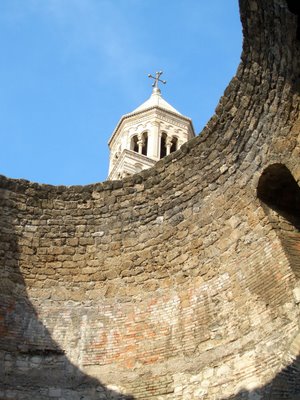
Min föresats var god, men jag hade inte mer än hunnit äta frukost och ta några steg genom Splits medeltida gränder fram till ett litet torg omgivet av uråldriga byggnader av smutsig kalksten förrän telefonen ringde. Mitt hallå avbröts av en bullrande mansstämma på engelska med kraftig slavisk brytning:
- Welcome to Split, Mr Norling! Where are you? I am at hotel. I have come to meet with you. You must come back so we can talk.
Det var Mr Director Ante Simunovic. Jag hade alldeles glömt att han ville tala med mig före symposiet. Han gjorde klart att han förväntade sig att jag med omedelbar verkan tog mig tillbaka till hotellet för att träffa honom. Moloken lommade jag tillbaka genom gränderna.
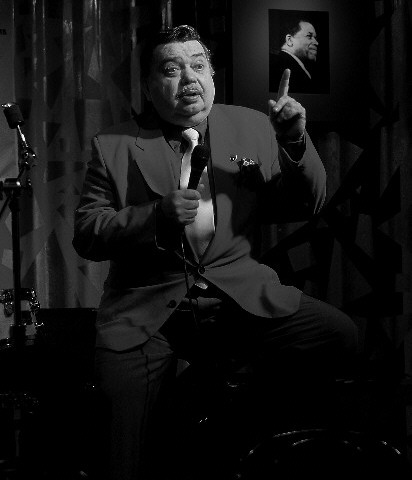
Simunovic visade sig vara en stor och bullrig man med skrynklig grå kostym och slarvigt knuten slips. En enorm valrossmustasch guppade upp och ner på överläppen när han talade. Jag fick en känsla av att han log hela tiden, men det var omöjligt att se munnen under de kraftiga borsten. Ögonen var små och pliriga och förstärkte intrycket av att han var lätt road av omständigheterna. Mannen pratade med mig, eller snarare till mig, oupphörligen samtidigt som han beställde drycker i receptionen och drog med mig upp till hotellets takterass. Han pratade om Splits skönhet, av vilken jag ännu inte hunnit uppleva något alls, den kroatiska kulturens storhet i stort och den kroatiska jazzens internationella status i synnerhet. Jag kunde inte annat än humma medhåll, inte minst för att jag inte fick tillfälle att skjuta in något mera verbalt sammanhängande. Å andra sidan passade det mig bra eftersom den enda tanke som gnagde i mig var att jag på något sätt måste måste måste skaffa mig djupare kunskaper om ämnet för mitt föredrag om två dagar.
Alltså befann jag mig i en långt gången fundering kring hur snabbt posten normalt befordras i Kroatien och om jag skulle kunna förklara att jag ville ha skivor skickade som expressbrev ifall jag skulle bli tvungen att beställa skivor från Zagreb när Simunovic, tack och lov, med en tydlighet som lyckades tränga igenom min mur av ointresse, annonserade att det var min tur att tala genom att högt och ljudligt säga:
- So, Mr Norling, this brings us to your part in the festivities.
Jag stirrade dumt på honom tills jag insåg att han med festligheterna avsåg själva symposiet, den tillställning som var själva orsaken till min vistelse i Split, men som jag redan kommit att förknippa med ett kommande lidande, snarare än emotsedd trevlighet. Jag fick ytterligare respit av att en av hotellets anställda kom med en stor flaska sljivovica och två små glas som raskt fylldes. Simunovic höjde sitt glas, spände allvarligt ögonen i mig och utbringade en skål. Jag svalde raskt den sötsliskiga spriten i förhoppningen att finna mod och inspiration i alkoholen, men den enda effekten blev att jag hostande och med svidande strupe kände ögonen fyllas med tårar.
Jag torkade bort tårarna med skjortärmen och när jag åter kunde fixera blicken på jazzsymposiets direktör var hans blick mörk. Jag tyckte mig skönja en viss otålighet och började svamlande improvisera något slags programförklaring:
- Well… ehrm, it is of course a great pleasure to be here in beautiful Split, sa jag lismande. And… I look very much forward to speaking at the symposium… eh… in front of so many distinguished guests. (Vad fan yrade jag om? Jag hade ju inte ens orkat läsa gästlistan!) And of course it is a special pleasure to have the great honour to speak about such an iconic figure as the great vibes man Boško Petrovic. (Jag insåg panikslagen att mina ord styrde mig rakt mot avgrunden.) And… eh… to be able to… ehrm… assess his role as… uhmm… one of the prime movers on the European jazz scene!
Jag blev så lycklig av att jag hade lyckats få ihop en så fulländad konstruktion av totalt intetsägande dravel att jag nästan skrek fram de sista orden i triumf och till min stora förvåning hade det nöjda plirandet återvänt till Simunovics ögon. I fortsättningen gick allt mycket lättare. Efter ytterligare ett par meningar med inställsamt nonsens skålade vi ännu en gång i sljivovica, den här gången utan att jag drabbades av några alltför pinsamma hostningar eller vätskeutsöndringar. Vi småpratade nu ivrigt om sexti- och sjuttiotalsjazz. Jag mindes tack och lov namnet på pianisten i Zagreb Jazz Quartet, Davor Kajfes, och det faktum att han flyttat till Stockholm redan 1967 ledde osökt vidare till ett ämne jag kände mig betydligt bekvämare med, nämligen svensk jazz från samma tidsperiod. Vi pratade lite om Davor Kajfes son, saxofonisten Goran, och hans höga status på den samtida scenen, men mest förstås om Jan Johansson, Lars Lystedt, Jan Allan, Georg Riedel och andra giganter från förr. Simunovic visade sig var väl insatt och i ärlighetens namn var det han som pratade mest och jag kunde tacksamt lutade mig tillbaka i fåtöljen, redan lullig och allt eftersom förmiddagen led allt djupare försjunken i berusning och dagdrömmar om glödande torn och urgamla murar av kantig kalksten med frodig växtlighet i sprickorna.
Jag vaknade ur min halvslummer av att Simunovic plötsligt var djupt inne i en lyrisk lovsång till sitt land, dess kultur och inte minst de expressiva och djupt manliga dalmatiska à capella-sångarna. Ögonen var vilda och valrossborsten dansade upp och ner på läppen som en rad av extatiska can can-dansöser. Plötsligt kände jag en djup tacksamhet och lycka över att få vara just här, just nu, i denna vackra stad med sin historia och sin kultur och sin fantastiska jazzvibrafonist Boško Petrovic. Återigen kände jag tårarna komma fram i ögonvrårna, men denna gång av rörelse och stolthet. Jag slet upp mitt glas från bordet så att hälften av den gulaktiga spriten flög iväg över bordet och skrek, inspirerad av min druckna mustaschvision:
- Viva Dalmatia!
Simunovic tystnade häpet och visste för ett ögonblick nog inte om jag drev med honom eller var allvarlig, men hela jag var nu uppfylld av ett slags ställföreträdande nationell stolthet och jag reste mig med brinnande ögon och utbringade en skål för Kroatien, dess folk och dess kultur. Simunovic kunde inte gärna annat än följa mitt exempel och när vi svept sljivovican föll vi i varandras armar, nu du och bror, förenade inte bara i vår kärlek till jazzen utan också i vår kroatiska nationella stolthet. I Simunovics fall säkert alldeles äkta och berättigad, i mitt fall resultatet av den enorma lättnaden över att ha klarat mig igenom mitt första möte med jazzsymposiets direktör relativt helskinnad. Det gjordes upp planer där och då att vi skulle träffas samma kväll för middag, jag, Ante, hans fru och ett par av deras vänner, han en lokal jazzmusiker, hon en högt uppsatt person inom Splits kulturförvaltning.
—
Den eftermiddagen tillbringade jag i lycklig berusning. Jag hade inte glömt mitt trängande behov av att förkovra mig i Boško Petrovics musik, men efter min bonding med Ante Simunovic på hotellterassen kändes det som om det kunde vänta. Jag var ju nu en stolt vän till Kroatien, dess folk och kultur, och det föreföll passande att börja med att bekanta mig med den 1700-åriga staden Split. Vid Rivan möttes jag av en varm adriatisk smekning mot min kind. Havet tinglade och vibrerade turkost som en xylofon och palmerna susade som returspåret på en lp-skiva. Jag släntrade längs hamnbassängen, liksom hundratals andra, och kände mig på ett självklart sätt del av den här kulturen, det långsamma släntrandets kultur. Jag kände en gemenskap med människorna jag mötte, grupper av unga killar med solglasögon och uppumpade egon, tjejer med höga klackar och avvisande blickar, herrar med bistra fårade ansikten som minns kriget. Jag hade ingenting gemensamt med dem och allt. Detta att släntra fram längs Rivan medan solen och havet gjorde optiska experiment på våra ögon, att vistas i den här bubblan av värme, förstulna blickar och terrorbalans, det var ju faktiskt ett allt, i detta nu.
Senare i labyrinten av gränder, med den nyktra svalkan från tusenåriga stenar. Jag rörde mig i ett oförutsägbart mönster, utan vilja att nå varken mittpunkten eller att komma ut på andra sidan. Jag tänkte på att labyrinter alltid avbildades uppifrån men det var egentligen mitt i dem, i irrandet, som labyrinten kunde upplevas som labyrint och inte bara ett intrikat grafiskt mönster, en aptitlig visuell gåta. Med jämna mellanrum mötte jag andra som jag, besökare, som diskuterade och gestikulerade och försökte förstå en karta. De hade drabbats av labyrintpaniken. De ville komma ut, de ville lösa gåtan, oförmögna att förstå att gåtan inte längre var en gåta löst, att det enda tänkbara förhållningssätt var att låta gåtan bestämma vart den ville föra sin betraktare.
Sedd uppifrån skapas illusionen av labyrinten som en figur med en horisontell utsträckning, som om upplevelsen av att vara i labyrinten är att skapa en vindlande stig längs de blankslitna stenarna som utgör labyrintens golv. Men i själva verket är det vertikalerna som är labyrintens sanna element. När blicken riktas framåt tycks labyrinten ovillig att berätta mer än det som anas fram till nästa krök eller vägskäl, men uppåt öppnar sig en strimma av den blåa himlen, där hänger tvätten på tork mellan fönster som ingen orkat stänga luckorna för, eftersom solen ändå aldrig når dit, där hänger klasar av intensivt cerisa blommor från balkonglådor, där anas buskage av vital hibiskus på plötsligt utskjutande terasser. Stenarna, antingen stora och skrovliga eller mindre och putsade, blir ledtrådar till stadens utbredning, ombyggnad, återuppfinnande.
The Magic of the Wilsons
8 juni 2009

Jag återsåg nyligen serien Parker Lewis från 1990 (som kan vara ett skäl bland andra till detta bands namn). Jag tänkte på att serien innehöll en estetik som man som 80-talist hyser djupt i sin föreställningsvärld. Den är grunden till allt tänkande om hur saker ser ut egentligen. Smak fri från pastell och luftiga tröjor är något vi har fått lära oss i ett senare stadium av varseblivning.
Förförståelsen för väldigt lättsamma, färgglada popkulturyttringar når även tidigare, till en tid då man tog in den musik man hörde men ännu inte följde tv-serier.
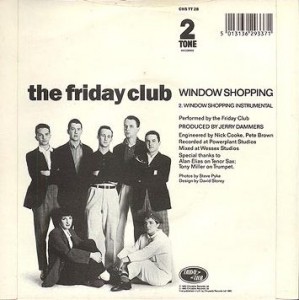
En så glättig, festlig låt som The Friday Clubs “Window Shopping” undgår därför all kritik. Det kanske inte är musik för alla dagar, men den har en plats i världen.
En gentleman som ska förbli anonym smyger fram sina Danny Wilson-skivor först när festen kommit in i en tredje eller fjärde fas. Men “The Ballad of Me and Shirley Maclaine”? Inga spärrar.
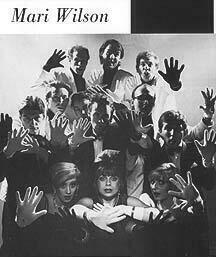
Bryan Ferry reagerade 1982 på den jazz/polka-dot-poppiga “Beat the Beat” av Mari Wilson (Compact-tjej som Virna Lindt), såsom det konstigaste han någonsin hört. Jag kan förstå det som musikhistoria, men inte annars. Men faktiskt har den något som gör den extra rolig. Hon leker med beats, med showmusik, med saker omkring sig.
Afternoons in the local zoo
Doing things that the monkeys do
The Poet
25 maj 2009
Ur Maurice Sandoz Fantastic Memories:
”’This afternoon,’ said my mother, ’a pianist and a poet are coming to tea. Whatever you do, do not suggest that the pianist should play. This is his first visit and it would be in the worst possible taste.’
I must admit that this warning struck me as quite superfluous. Did not I, twice a week, have to sit for one solid hour on a hard and wabbly stool, beside Madame Froebel, being admonished to ’mind my thumb’ and ’mark the time firmly’ on the yellow keys of an ancient piano? And Madame Froebel, overconscientious, was in the habit of giving precisely sixty minutes in return for a ticket inscribed ’one hour.’
If my lesson was considered to have gone well Madame Froebel, as a reward, would sit down to the piano and play, better, I must admit, than myself, ’The Merry Peasant,’ and Heller’s ’Berceuse,’ the pieces which I then happened to be studying.
And as I had good reason to know every note of these compositions it gave me no pleasure to hear them played and never, no, never, would it have occurred to me to extend so rash an invitation to the expected visitor. It seemed to me inevitable that he would burst into the ’Berceuse’ or ’The Merry Peasant.’ I was somewhat surprised that my mother had not admonished me in the same fashion with regard to the poet, but the omission only served to prejudice me in his favour, and from the moment he arrived, I adopted him, to the exclusion of the pianist. The latter struck me as boorish, while the poet impressed me with his supreme elegance.
His hands in particular fascinated me. Their polished nails shone like dewdrops; they might have been mirrors for skylarks and no wonder that a young starling like myself fell for them at once.
His face certainly showed the pallor and gravity which I realized could belong only to a poet.
Being anxious to ingratiate myself with this disciple of Apollo, I never ceased to press the sugar basin on him, and no doubt for fear of hurting my feelings, he accepted lump after lump. Poor poet! He drank syrup that day, but I was in seventh heaven.
’Monsieur,’ I ventured timidly at last, when he had put down his cup, ’how does one write poetry?’
With an air half serious, half joking, he said: ’You need for that a Dictionary of Rhymes, plenty of cigarettes, and about ten years’ serious study of the classics.’
A gloom seemed to settle over my future. I could, at a pinch, ask for a Dictionary of Rhymes as my next birthday present, I might even succeed in appropriating my father’s cigarettes, but ten years of classical study seemed to me unsurmountable.
The two visitors departed and I was left dreaming.
But I burned to see the poet again. I succeeded, and I do not think he was displeased to hold forth to such a fervent and attentive listener. It is a fact that very few people dislike being listened to religiously.
He it was who really taught me to read and write. I am not alluding to the mechanical actions we learn at school, but to the power to read slowly, with attention, striving to visualize, down to the most intimate detail, those images that the author tries to evoke. He taught me to analyze, first by ear, then by sight, the harmony that flows from a happy phrase.
If I reserve a place for the poet in these recollections it is not from gratitude for the many true, precise, and useful things he taught me. No, it is because he gave me the key of gold that opens the doors of imaginary palaces and because he made me at home in their capricious labyrinths, where he taught me to wander about but never lose myself.
One afternoon in September, not long after our first meeting, the poet deigned to visit our garden, which he had not yet seen and which I was only too proud to exhibit.
Instead of bread and salt, those symbols of hospitality, I proposed to offer him a ripe and absolutely perfect pear, the only fruit of a tree that I had planted with my own hands, the dirty hands of a little gardener, three years before.
It was the first fruit of a ducal tree (a ’Duchesse’ pear tree). In offering it to the poet I was voluntarily sacrificing my greed, my curiosity, and three years of impatience on the altar of my admiration.
The poet contemplated the pear which hung, motionless, at the end of a branch that bowed beneath its weight.
’No, do not pick it now,’ he said. ’We will come back for it in an hour. By that time it will have attained all the attributes of perfection.’
I was, I must admit, very much astonished. But as such desires counted as orders I obeyed, quite at sea as to how the passage of one hour could influence the qualities of an already ripe and beautiful pear.
I introduced my friends the plants and flowers to my friend the writer. I showed him the Calycanthus, which gives out an aroma of strawberries over an area of a hundred meters; the aromatic turpentine; the Wellingtonia, which five people, with their arms extended, could not span. I presented him to our cedars, our chestnuts, our copper beeches, and a host of others. All these I paraded in front of the no-doubt-rather-bored eyes of the master to whom for the moment I had elected to act as mentor.
At the end of a long hour a turn in the path brought us once more to the pear tree.
I picked the fruit and handed it to my companion.
’Tell me, monsieur,’ I said (I continued to address him in this way for several months, for it did not seem to me that anything would ever authorize me to address a poet by his Christian name), ’tell me, please, why you like that pear better now than you did some time ago?’
’When we came this way an hour ago,’ answered the poet, ’the tree was in shade and its fruit hanging inert and frozen, a lifeless thing. Now it is bathed in sunlight. Place it against your cheek. Don’t you feel as if you were pressing another cheek, warm as your own? Now, with every particle of that fruit I shall taste a little of that sun that bestows its rays so charily in this terrible region of ours, which, for reasons that I cannot pretend to understand, we have christened the Temperate Zone.’
It was thus, in a garden, at the close of a beautiful day, that the poet showed me one of those secret paths that are sometimes sought for for so long by those who seek perfection in the art of living.

I was destined to visit him a year later, in Paris. It was at the beginning of October and I was with my parents, who had decided to spend the autumn in Brittany.
I was obsessed less with the prospect of seeing the sea for the first time than with that of at last visiting the home of a poet. And I was not disappointed.
An ivy-covered court separated the house from the road, stifling and deadening all sounds from without.
To my great joy I discovered that the traditional bell had been replaced by a knocker. It was made, if I remember clearly, in the form of a satyr and one had to lift him up by the horns, or possibly pull his beard, to make him fulfill his office.
The door gave on to an antechamber hung with tapestries, bearing orange and lemon trees growing in dark green tubs and embellished with fruit and birds.
Then came the drawing room, divided up by screens in Japanese lacquer. Little tables and fragile chairs were dotted here and there.
These articles of furniture seemed to me so delicate and frail that my admiration for the poet who could live among them without breaking anything increased.
In the middle of the room hung a Venetian chandelier of opal glass. It floated in the silence like a gigantic jellyfish. The felt carpet fascinated me almost as much as the chandelier. It seemed to me to be woven with those azure butterflies known as the Argus, whose wings bear a large blue eye, wide open on the summer sun.
Against the wall, to right and left of a black marble fireplace, long, narrow mirrors faced other mirrors of the same shape, and, reflecting each other, formed dream galleries which seemed to go on to infinity.
The master of the house did the honors. He showed me a peasant kitchen which served as his dining room, and which, at the moment, was in the sole possession of a green parrot.
He also showed me his bedroom, almost entirely occupied by an immense bed. I particularly admired the canopy, the corners of which were royally adorned by four ostrich plumes.
Above the cushions which ornamented the bed by day the wall was decorated with a trophy. Looking back I can still see those ancient instruments, arranged in a sheaf. A guitar in the form of a lyre, a mandolin, a viola d’amore, and a shepherd’s flute decorated with ribbons. I almost forgot the tambourine with its tiny gold cymbals. No doubt this orchestra lulled the sleeping poet’s dreams with sweet harmony.
No, I was not disillusioned. And yet, toward the end of my visit I was conscious of a slight chill. Outside, it was raining softly. The light was gray. The corner of the sky that one could see over the ivy clustered round the window was cinder-colored. Everything spoke of autumn.
’I do not like October,’ I said to the poet. ’It’s the first month that makes me think of winter.’
’You will love October in the days to come, when you are tired of the bright colors which blind one in summer. But, as you regret the summer so much, I will bring it back to you.’
He had risen and was pulling down long, lemon-yellow blinds over the windows.
’It is better already,’ he said, indicating with a gesture the illusion of sunshine that had suddenly pervaded the room, ’but we can improve on it. They say, from laziness or cowardice: ’Striving to better, oft we mar what’s well,’ which is merely a way of saying that it wasn’t really ’well’ in the first instance.’
With these words he descended to the court and closed the outside shutters, in such a manner as to leave a space between them only as large as the palm of one’s hand.
The effect was magical. In contrast to the dusk already achieved in the room the blinds, in the tiny spaces that were lighted from outside, gave out that ardent note they would have struck had a pitiless sun been shining on the windows. It seemed as if the shutters had been hastily closed to keep out the heat and glare of an August day.
The poet placed a bouquet of red roses in the path of one of these rays. It was just another bit of summer introduced into the scene. But even then my new friend did not seem quite satisfied.
He took from the chimney piece a little cardboard box and shook it with an air of mystery.
’Here is summer,’ he said. ’Here, at last, is summer.’
And he opened the apparently empty box.
At once the room was alive with the buzz of flying bees.
For an instant they filled it with their humming. Then there was a sudden shock, a double or triple impact against the windowpane. Bewildered, they stopped. A silence of two seconds, then they flew to the other end of the room, only to return and hurl themselves against the window, drunk with the false beams of the sun, a mirage evoked by the fantasy of a poet!
And that humming, that repeated impact against the window, brought back those lovely vanished days so perfectly that, when my host asked me to choose, I took a glass of lemonade instead of tea.
’He’s a magician,’ I thought, ’like the ones in the fairy tales.’
Years passed. I followed the advice of the poet. I even arrived sometimes at a comprehension of the technique of his simple yet subtle style. I knew the methods by which, at will, he surrendered himself to joy or melancholy. I even tried to pilfer some of his secrets.
Then one day he disappeared, leaving no trace.
His friends notified the police and the detectives did their best, but in vain.
There was a suggestion that he had departed secretly to taste the pleasures of some tropical island and that the ship had been wrecked on the way.
But I think myself that he had voluntarily left a world, the enchantment of which he knew he had exhausted.
When I give my imagination full reign I see the poet, as though it were the most natural thing in the world, suddenly spread his wings and sail through the air to the enchanted lawns of the Elysian fields, bearing a crystal lute and picturesquely convoyed by a swarm of golden bees.”
The Limp-Paged Album
22 maj 2009

Ur Maurice Sandoz, Fantastic Memories, 1944:
“I have already spoken of my great-grandfather. Doctor, surgeon, chemist, botanist, perhaps even something of a sorcerer, he would certainly have been burned at the stake, or died on the rack had he lived a century earlier.
He worked for choice in the hospitals in the big seaports. These offered a rich field for research. ‘One found everything there, even leprosy,’ he declared once, rubbing his hands with an air of rapture. He passed his nights in recording his observations, surrounded by retorts, crucibles, human skulls, and strange instruments. The censorious talked below their breaths of impiety, insensibility, even of sacrilege.
Among his legacies to us is an old album. It is distinctly shabby and of vast dimensions. I still cling to it, for it reminds me of my childhood.
Those sufficiently curious to open it will be astonished, to begin with, by the small number of its pages - twelve, to be exact. Then they will be disappointed by the quality, with one or two exceptions, of the pictures. But if they be observant, or, better still, imaginative, they will remain fascinated by this collection, in which everything seems calculated to surprise them.
The thickness of the pages is unusual and their odd limpness disconcerting to the fingers that turn them. They curl back on themselves like the buckskin that is still used in the burnishing of gold.
But the most potent quality of this album is the softness, the actual warmth of the pages. I have found myself holding them to my face, closing my eyes and wondering whether I was not pressing my cheek against that of a human being. And that impression was so strong that I could almost catch the sigh of a quick breath or the faint beat of a heart.
As for the pictures themselves, in spite of a similarity of technique they are certainly the work of various amateurs and the subjects have no logical continuity.
The first page bears the image of a pagoda. It is well drawn and towers, nine stories high, between two curious suns, in relief, whose presence is not at first easily explainable.
The second drawing, less able, represents in monotint the head of a woman. Her hair looks more like a bunch of black grapes than one of the chignons then in fashion. From either side of the coiffure little chains hang in the manner of earrings. They culminate in two baroque pearls, these also represented by two curious little reliefs. Anyone running a finger over the page is immediately conscious of them and recaptures suddenly a sensation that will not be new to him, though for many, if not all of us, it remains unexpected and unaccountable.
The other drawings are too mediocre in quality to be worthy of mention, but the last, the twentieth, is interesting.
It is of the life-size head of a tiger, in three colours, orange-tawny, blue-black, and crimson, this last colour being reserved for the gums and the corners of the eyes.
My father did not like to see us fingering these curious pages.
‘Leave that book alone, children,’ he would say, frowning, and he would press on us a volume full of brightly coloured plates illustrating the flora of the Dutch Indies. For a moment we would be dazzled by the fruits and flowers, but, hardly had he turned his back than, very quickly, we returned to our first love, the mysterious book and the face of the woman who wore the strange earrings.
A connoisseur, looking at the head of the tiger, would immediately be reminded of the art of the Far East. But, if he were to examine the ferocious mask more closely, the tippling of the outlines, and, particularly, of the shadows, would put him on the scent.
‘Tattooing!’ he would exclaim, pushing the book aside in disgust.
And, in fact, they are tattoos. The album consists of twelve pieces of human skin, taken from the chests of twelve sailors who had died in hospital!
But do not blame the originator of this macabre collection too hurriedly.
What my great-grandfather was in search of was the secret of eternal youth. For years he worked, untiringly, desperately, to conserve the beauty of the woman who was his all, and to whom he meant so little. Grandmama Gladys departed this life at the age of seventy, radiantly beautiful, with her cohort of admirers as large as ever, though for half a century Death had done his best to thin their ranks.
I understand now why my father did not like to see us poring over that album.
We did not know when we bent over the face of the woman with the strange headdress that the pearls in her earrings were formed by the nipples of the flat breast of a sailor lad who had died in hospital.”
Det ljuva gula ljuset
11 maj 2009

De första flygingenjörerna ville aldrig att deras tekniska upptäckter skulle användas i kriget (fast det var bara kriget som gav dem anslag).
Jocke ville aldrig att hans majresa till Kroatien skulle tvinga honom att bada (men han skickade ett sms där jag förstod att han önskade att jag hade fått det). En gång, för några år sedan, önskade han att jag skulle få höra “Auntie Aviator”. Jag hade inte internet men varje kväll hade jag UFO-skenet från folketsparkrotundan i min lägenhet som spelade gult över väggarna medan jag lyssnade på John & Beverley.
1983: Brenda & The Big Dudes – “Weekend Special”
5 maj 2009

Kåk i Langa, Kapstadens äldsta township.
Nu har det hänt tre gånger. Jag frågar någon av mina sydafrikanska vänner om de vill hänga med på invigningen av ett konstprojekt om Brenda Fassie som öppnar i Langa High School på lördag. Då är det nämligen exakt fem år sedan hon dog. De tystnar genast och får något förvirrat och förnekande i blicken, och tycks sköljas över av lika delar saknad efter en av Sydafrikas största sångerskor, och desperat, panikartad förvissning om att tiden går alldeles för fort.
- Fem år… det verkar inte… tycks inte vara fullt… så längesen…
När Brenda Fassie låg i koma på dödsbädden i maj 2004 var hennes hälsotillstånd förstasidesnyheter i landets tidningar och såväl Nelson Mandela som dåvarande presidenten Thabo Mbeki vakade vid hennes sida. Men den 9 maj dog hon, 39 år gammal, och just nu kan jag inte låta bli att köra ”Weekend Special” om och om igen på Youtube, trots att 2 GB kostar 380 spänn i det här landet.
Om BBC-dokumentären “Do it yourself - the Story of Rough Trade”
20 april 2009

BBC-dokumentären Do it yourself - the Story of Rough Trade bringar många gamla, fortfarande aktuella, spörsmål till ytan. Den gör det för att den speglar olika, kontroversiella aspekter av livet självt. Något som börjar i en slags naiv kommunististisk, innovativ anda övergår sedermera i girighet, växtkramp, konformitet, konkurs och slutligen en slags upprättelse.
På 80-talet var London mitt andra hem. På ett sätt var det enklare då. Jag behövde bara tre rådande källor till inspiration: NME, John Peel och skivbutiken i närheten av Portobello Road kallad Rough Trade. Det var rätt ruffigt i den delen av London. I korsningen till Talbot Road blev jag för första gången erbjuden hasch. Rastas, skinheads och anarkistsquatters trängdes tillsammans i butiken som tilläts att formas genom dem. Folk kom in, stämplade upp en affisch på väggen, småpratade med någon bekant och sprang därifrån till synes utan att någon av butiksarbetarna ens reagerade. Inledningsvis var jag lite blyg och vågade inte fråga om de kunde spela en viss skiva. Dels kunde den ju vara inplastad, dels ville man ju inte bekymra personen bakom disk med något som eventuellt kunde skära sig i öronen på övriga närvarande. Snart lärde jag mig att det aldrig var ett problem på Rough Trade. Här spelades allt obskyrt och eklektiskt man kunde tänka sig och man var inte ensam med sin personliga dissonans. Bakom lång lugg ögnade jag snabbt igenom skivbackarna och hittade precis allt jag sökte och även sådant jag aldrig trodde jag skulle hitta. Om Peel spelade det och det fanns på vinyl eller kassett, då fanns det i backarna på Rough Trade. De aningen squatterliknande killarna och tjejerna bakom disken var ovanligt vänliga och intresserade av det man frågade om. Man gick ut från butiken med en känsla av att man faktiskt var en del av det hela, inte endast en konsument.
“We say the marketplace is a false creation and has very little to do with the reality of what people want, given the option.”
En vass, nästan rörande idealistisk och klarsynt Geoff Travis uttalar sig i början av filmen. Den afrofriserade juden som startat skivaffären drev, tillsammans med den sympatiskt stammande Richard Scott, både ett skivbolag och en distributionskedja som växte och till slut omspann större delen av England.
Verktyget blev DIY och insikten att man kan tillverka skivor tillsammans med likasinnade utan inblandning av de stora multinationella bolagen. Rough Trade blev distributören och katalysatorn. Där fanns ingen allenarådande musikstil utan det var en slags kompromisslöshet och ett agerande helt utanför normerna kring musikindustri som samlade musiksnobbar från när och fjärran. Man skapade ett eget sätt att sprida idéer och musik. I dokumentären visas bilder på valda medlemmar av marxistkollektivet Scritti Politti som sitter och klistrar, stämplar och viker skivomslag vilket känns museilikt idag när man i hemmet kan skapa musik och distribuera den till hela världen genom några få knapptryckningar. Då var det revolution.
Travis själv satt där bakom disken i detta chimära kaos, hjälpt av en skara likasinnade och gjorde “The Geoff thing”, dvs personliga val av vad som skulle ges ut på Rough Trade, för det handlade om en intuitiv fingertoppskänsla.

Just Scritti Politti skulle dock visa sig vara droppen som fick bägaren att rinna över för Rough Trade. Gruppen spelade tidigt en viktig roll, inte bara musikaliskt utan även politiskt, med en ideologisk bärkraft inspirerad av bl a den socialistiske filosofen Antonio Gramsci. Musiken var en tidstypiskt quirky, dubbaserad, funkpunk med popinslag. Även om Scritti Politti var djupt politiska saknade framförandet den brutalt agitatoriska tonen hos t ex Mark Stewarts Pop Group eller the Gang of Four. Green, sångaren, kämpade med inre demoner frambringade av droger och det magra, rotlösa levernet i Camdenkollektivet. Han bröt av hälsoskäl upp med sitt forna liv, anammade en minneslös hållning och satsade helhjärtat på pop av det sötare och mer kommersiellt gångbara slaget.
Singeln “Sweetest Girl”, som släpptes 1981, skapade slitningar mellan Geoff Travis å ena sidan och Richard Scott och Mayo Thompson (Red Krayola) å andra sidan. Travis hade sett att Rough Trade börjat bli en grogrund för majorbolagen och ville inte tappa ännu en betydelsefull artist. Scott, som byggt upp hela distributionskedjan, såg hur man nu försökte jaga hits. Robert Wyatt, gästkeyboardist på singeln, berättar i dokumentären hur han inte riktigt kunde förstå dualismen mellan indie och kommersiellt. Han menade att det var skuggboxning som inte riktigt gjorde någon skillnad när det gällde orättvisorna mellan rika och fattiga. Men konceptet att sälja ut var en essentiell fråga för varje musikintresserad under den här perioden, kanske den mest väsentliga. Det var skiljelinjen mellan det goda och onda, en personlig hållning, en politik som visade sig genom mer subtila ting som skivomslag, design och artistiska, ibland tvetydiga budskap och genom en socialt medveten individualism. Denna personliga sfär kunde omöjligt frodas på den kommersiella arenan eller kunde den det? Den enkla, polära striden kanske inte var så klar som den kunde framstå. I mitt fall skapade det en ambivalens.
Från 1982 och framåt skedde en massflykt av postpunkartister som “sålde ut” till de stora bolagen. Det låg i tiden. Man skakade av sig den del av postpunken som förknippats med mörka rockar och dystra profetior. Kanske var det livsnödvändigt. Scritti Politti lämnade Rough Trade och fick bl a en stor hit med “Wood Beez”. Just den låten kom att stå för allt jag avskydde. De blev i mina öron ekvivalenta med “skivbörstypen” som likaväl kunde lyssna på Level 42 och uppskattade “fin” studioproduktion och slapbas.
Jag har på senare tid intagit en mer pragmatisk hållning till fenomenet indie vs. major, kanske för att det numera helt saknar relevans. Ändå väljer jag, nästan 25 år senare, åter sida när jag ser den här filmen.
I somliga sekvenser, som den när Travis utfrågas om varför han sparkade Richard Scott eller om konkursen, ser man en mindre attraktiv, defensiv och företagsmässig sida av honom som jag har svårt att förlika mig med. Mannen som en gång släppte skivor med This Heat och the Young Marble Giants säkrar nu sin pension med retrorebellerna the Strokes och the Libertines. Det står klart att den som väljer att arbeta i musikindustrin, förr eller senare kommer att kompromissa med sina ideal och det skär aningen i hjärtat.
Vad hände förresten med Scritti Politti? Jo, de släppte en förvånansvärt bra skiva för ett par år sedan och till allas förvåning repade bandet in den gamla anarkohitten “Skank Bloc Bologna” till sina livespelningar. De kanske också slutligen valde sida.
Josephine, Annie & Martha (om du söker en kvinna!)
8 april 2009
Varje gång jag på något sätt mailar om musik med någon på Gmail, peppras reklamen i högerspalten med “Söker du en kvinna?”. Jag visste inte ens att jag sökte något där. Spegeln som ’slumpreklamen’ håller upp mot en föreställer en lumpsamlare och 40-year-old virgin som har skumrask i kikaren medan han mailar om sina perifera intressen med vänner lika störda och isolerade som honom själv.
Se, på nätet vill man kanske hitta saker som är nya för en. Man vill hitta nya sidor (av t ex Kevin Ayers), hitta oväntade hybrider (att han låter som om han har Kid Creole-blod) och titta på något otippat (dansarna som gör en Josephine).


Of course I had to have one
5 april 2009

Den är bättre på skiva men här kan man få lyssna efter var de ändrat texten (ifall man har tid).